What you can learn alone
- Intonation and rhythm: your ear, a tuner, a metronome and an app that listens help you check them
- Reading music and the notes on the fingerboard
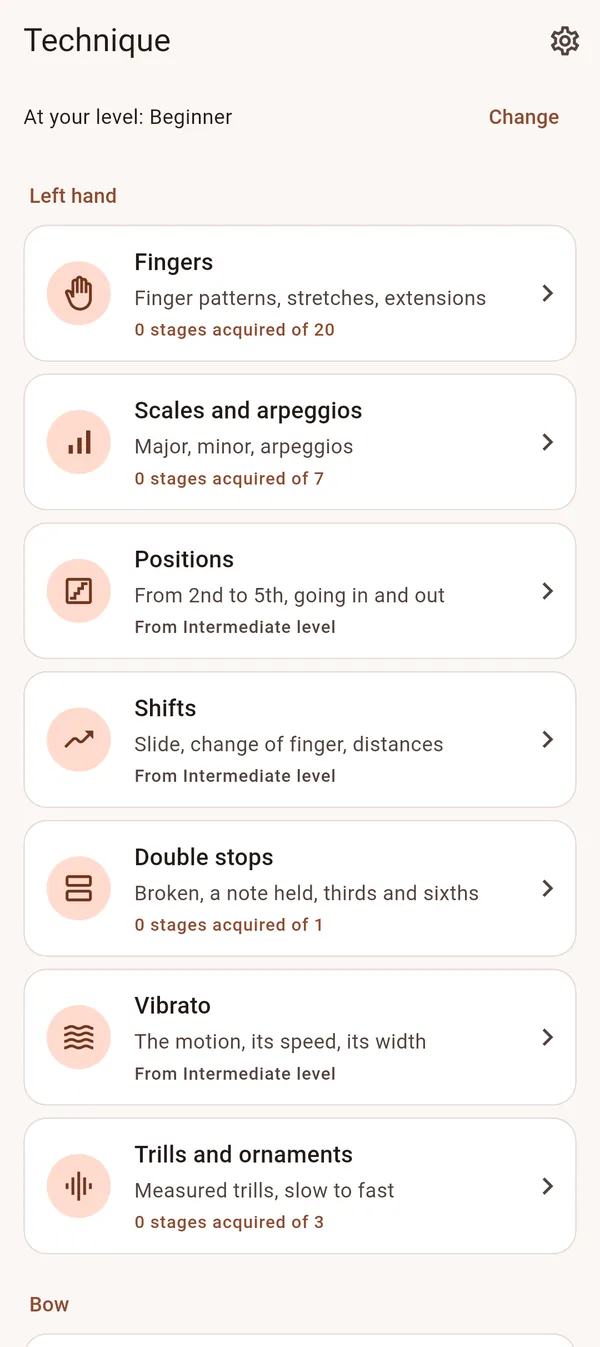
- Technical foundations: follow a method through finger patterns, scales, positions, shifts and vibrato
- Pieces and studies, at your level
What needs a teacher
A teacher can spot an uncomfortable bow hold, an inconsistent contact point or tension you may not notice while playing. Lessons at the start and occasional check-ins help you address these issues. A mirror or video can also give you useful feedback between lessons.
Learning as an adult
You can start the violin as an adult. Short, regular sessions and achievable goals make it easier to keep going when time is limited. The first months involve a lot of coordination, so give yourself time to build a comfortable technique and a sound you enjoy.
What you need
- A violin set up properly: the right size, a fitted bridge, good strings. A luthier can check a second-hand one
- A tuner and a metronome
- A method, in order, and simple music you like
- A mute if you live with others
The order to follow
A useful starting sequence is open-string bowing, first-position fingers, finger patterns, scales and simple tunes or studies. Third position, shifting and vibrato can follow as your foundations become more secure. Adapt the pace to your progress.