Start on open strings
Start a new rhythm on open strings so your left hand can take a break. Count aloud, including during rests. Ševčík introduces this approach at the beginning of his bowing exercises.
The rhythms in order
Build from simple note values to more complex patterns, following a progression used in theory and sight-reading:
| Level | Rhythms |
|---|---|
| Beginner | Quarters and eighths, rests, 3/4 and 2/4, ties over the bar line, dotted quarter and eighth, dotted eighth and sixteenth |
| Intermediate | 6/8, syncopations, the upbeat, off-beats, sixteenths, triplets |
| Advanced | 9/8 and 12/8, 5/8 and 7/8 counted in eighths (2 + 3, 2 + 2 + 3), two against three |
Subdivide the beat
Practise dividing each beat into equal parts. On an open string, play one, two, three, four and then six notes per beat without losing the pulse. Next, switch between subdivisions in different orders. This gives dotted rhythms and triplets a clearer framework.
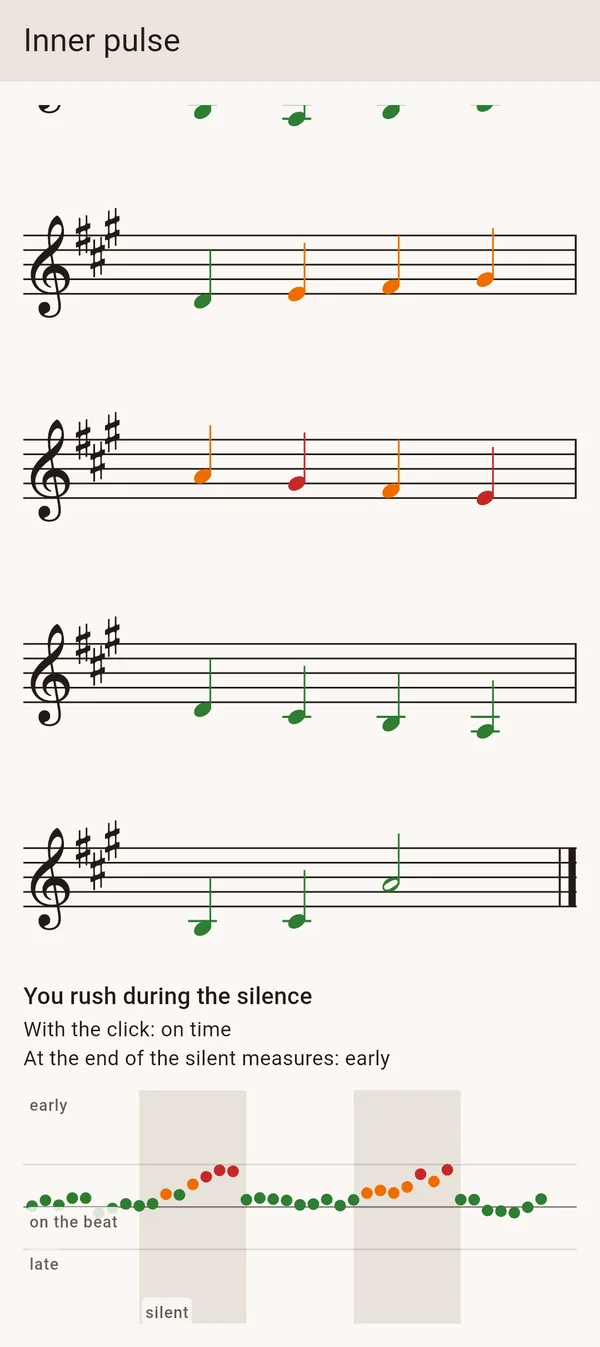
Keep the tempo when the metronome goes silent
Check your inner pulse by letting the metronome click for a bar, then fall silent for one, two or four bars. Keep playing and listen to whether you line up with the click when it returns. Notice any tendency to rush or slow down.
- Start with one silent bar, quarter notes on an open string
- Then two silent bars, then in eighths, then on two strings
- Build up to one bar with clicks followed by two silent bars, then four silent bars